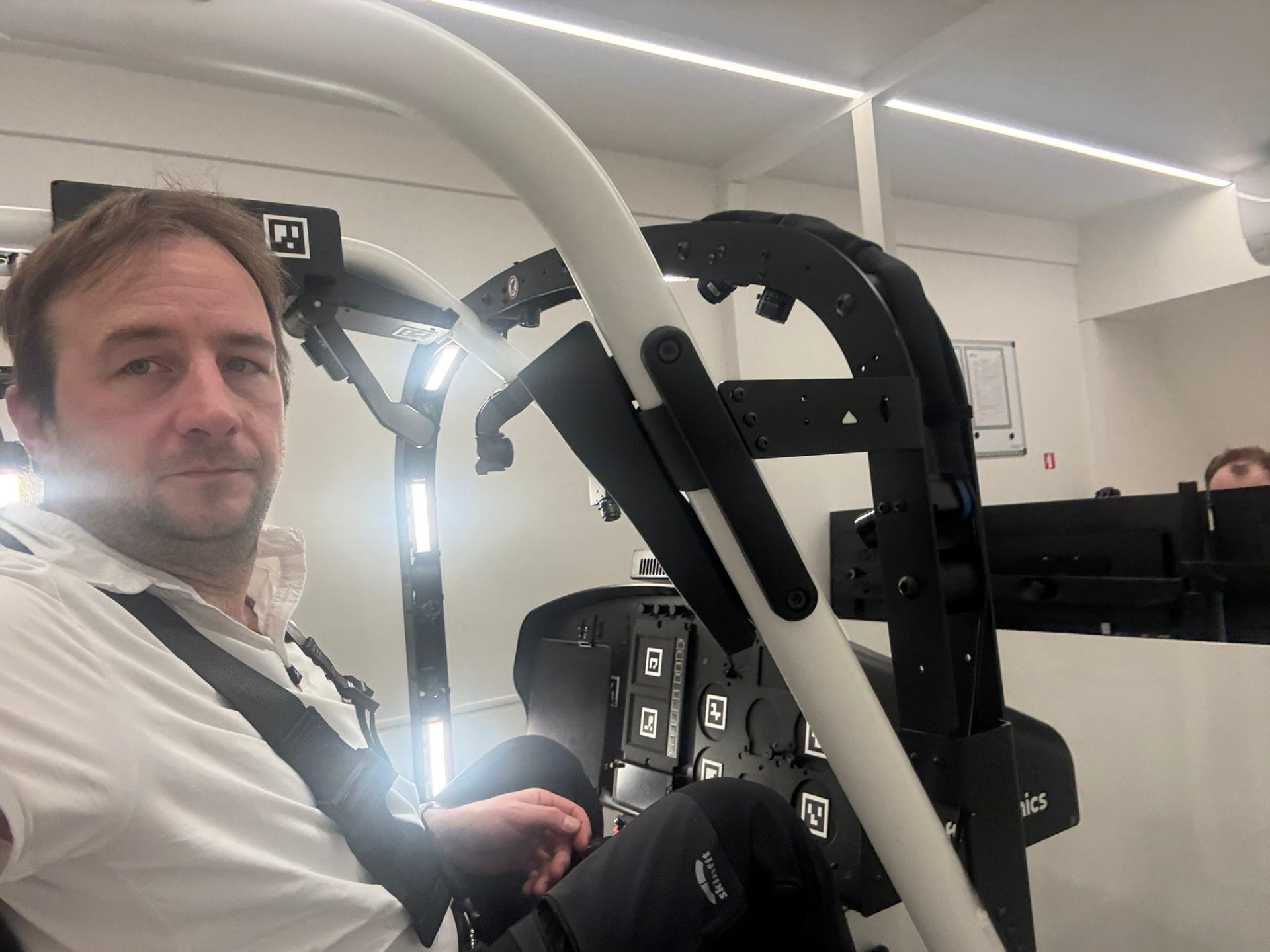

I was born on 6 January 1984, and at first it looked as though I would become a perfectly ordinary IT guy. I studied at the Secondary School of Applied Cybernetics, focusing mainly on database systems development. But fate had slightly different plans. Plans involving a rotor.
I grew up in a family where building and racing models was practically part of the household routine. My dad is a multiple slot car world champion, so it was only natural that I would get into something in miniature too. But instead of little cars, I was fascinated by helicopters.
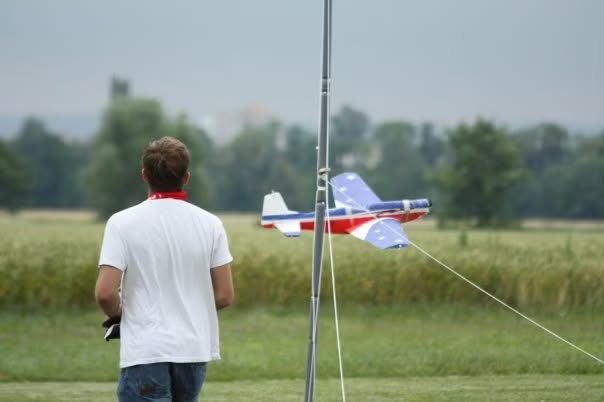
So I started flying radio-controlled model helicopters. Unfortunately, I usually managed to break them much faster than I could repair them. And since model flying can be an expensive hobby, especially when you learn mainly by trial and error, I switched to planes instead. They lasted a little longer.
But I couldn't get helicopters out of my head. Gradually, I began looking for a way to move from models to the real thing. And thanks to my parents' enormous financial support and faith in me, I found it. Without them, I would probably never have got into aviation.
Like many aspiring helicopter pilots, I had my sights set on helicopter emergency medical services. The idea of flying a rescue helicopter fascinated me, and for a long time it was my career goal.
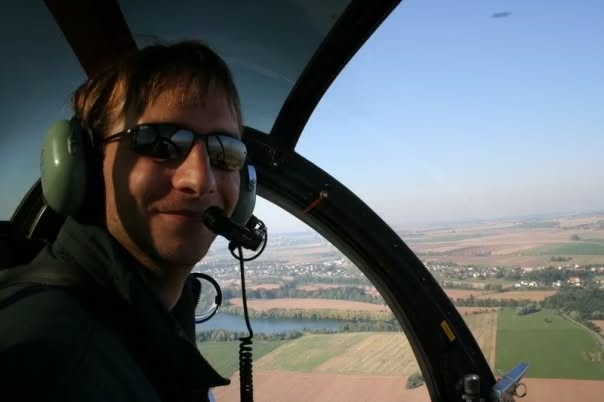
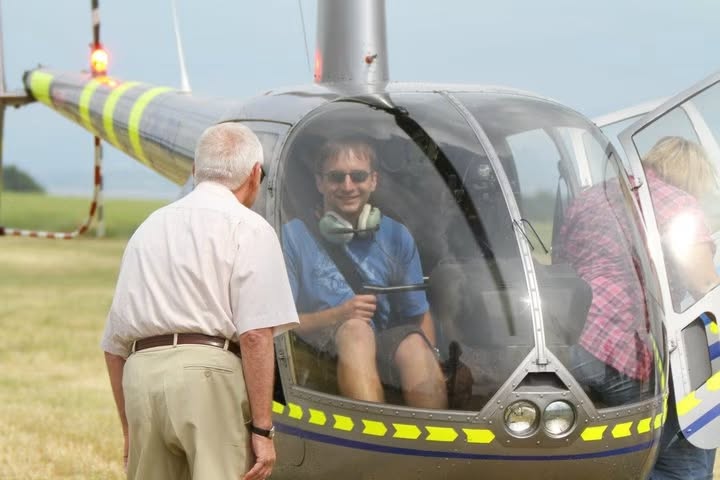
I gained my first real flying experience in a Schweizer S269C helicopter, which saw me through my initial training. Later came the AS355N and EC135. As my experience grew, though, I began to realise that rescue flying might not be the right destination for me. And that the path I had originally planned might lead somewhere entirely different.
When a pilot's licence doesn't mean a job
After getting my commercial pilot's licence, reality set in fairly quickly. I had the licence, the enthusiasm and the desire to fly. There was just one small thing missing: someone willing to employ me to do it.
So I went back to IT for a while. Along the way, I also learned to build slot car racing tracks. On my first major project, I led a small team of carpenters, and the result was a track that became the fastest in the world. Today, you'll find it at a slot car club in Chicago.
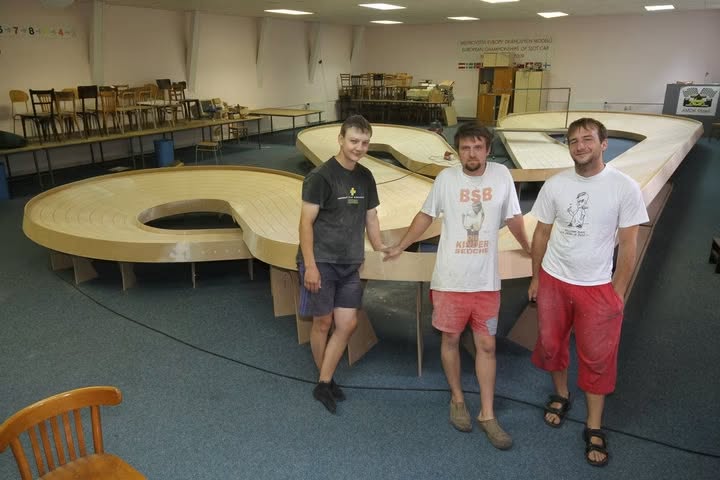
It's not exactly a typical entry on a helicopter pilot's CV, but at least I have proof that I can build something capable of serious speed. Even if it doesn't fly.
The turning point came with an opportunity to fly pipeline inspections. That work gradually led me into flight training, and I qualified as an instructor.
Over the next few years, I worked as a freelance instructor at various flight schools across the Czech Republic and Slovakia. I flew for LPS in Roudnice nad Labem and Skuteč, Nisa Air in Mladá Boleslav, and T-Air in Hradec Králové, as well as in Spišská Nová Ves and Dubnica nad Váhom.
And that was where I found something I began to enjoy perhaps even more than flying itself: teaching others to fly.
Every student was different, each brought new challenges, and every first solo flight was a small victory. Gradually, instructing became the main focus of my career.
How one helicopter became a company
As I spent more and more hours in training helicopters, I developed an increasingly clear idea of what I wanted to teach my students in.
The helicopters commonly used for training at the time no longer met my needs in several respects. I was looking for something more modern, more robust and, above all, well suited to high-quality basic flight training.
Just as I was offered a position as Head of Training at a flight school, a new French helicopter appeared on the market: the Guimbal Cabri G2.
It caught my attention so much that I contacted the manufacturer, Hélicoptères Guimbal, directly with the idea of bringing the type to the Czech Republic.
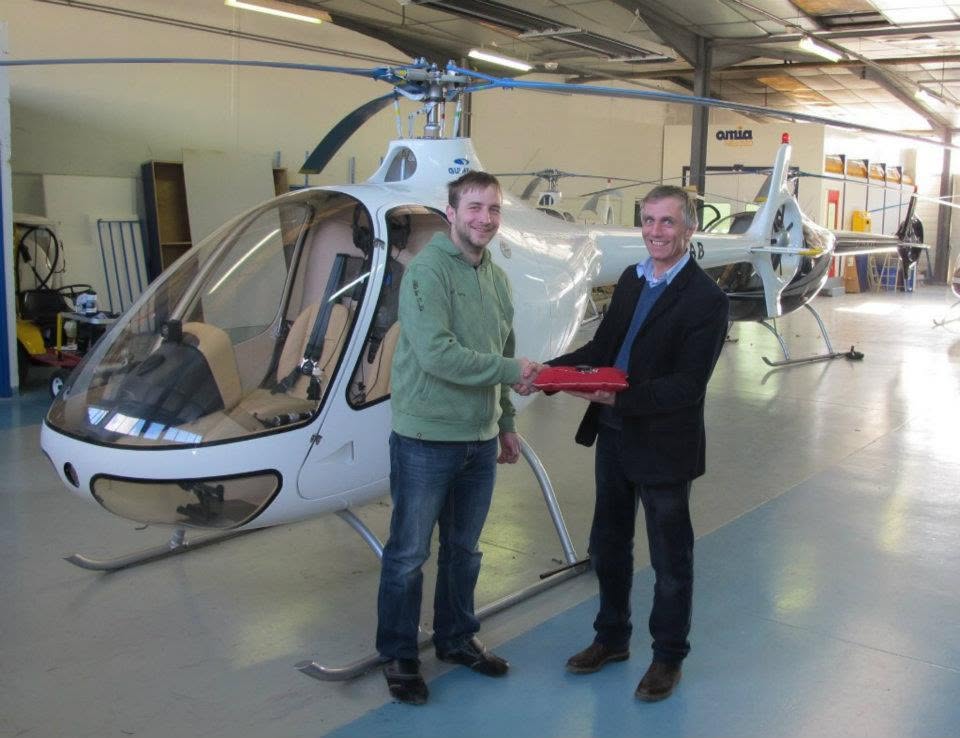
Before long, the first Czech Cabri G2—only the 32nd aircraft built—was on its way to Čechy. Tonda Kabelka from LPS was a tremendous help in getting it into service, and LPS also operated and maintained the helicopter during its early years.
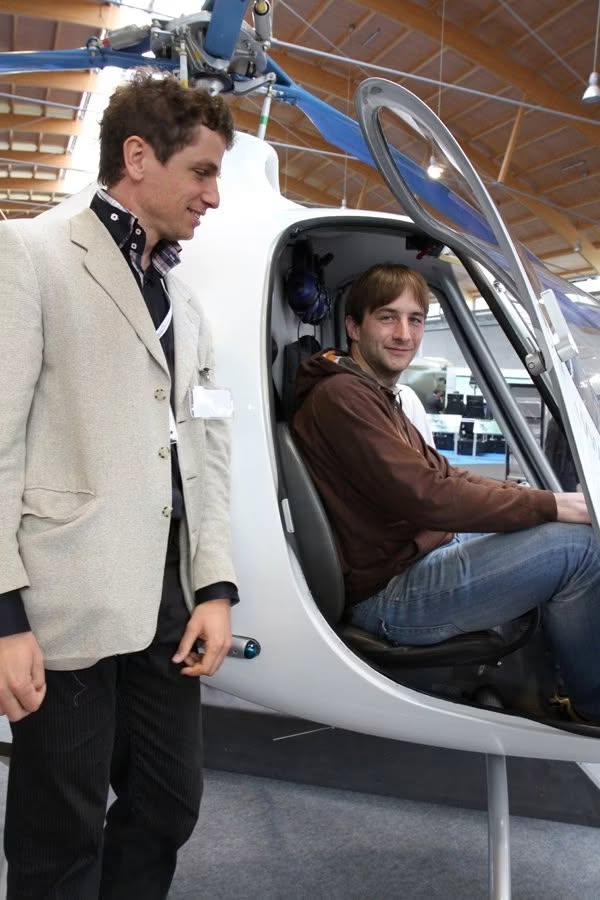
The original plan was actually quite simple. I wanted a good helicopter for training.
But then the manufacturer asked whether we would also like to sell the Cabri G2 in our region.
And so one helicopter gradually grew into a much bigger venture.
We established our own flight school, secured approval as a Continuing Airworthiness Management Organisation (CAMO), and eventually set up our own maintenance organisation too. Together with some fantastic colleagues, we built LION Helicopters into a company that now provides comprehensive services to helicopter operators across Central Europe.
And although we now handle much more than flying alone, the Cabri G2 remains at the heart of our company.
From flight training to VIP flying in the Alps
Alongside building LION Helicopters, I had opportunities to broaden my experience in other areas of helicopter aviation.
It started with flying an EC120 helicopter for private owners. Later, an opportunity came to help introduce a brand-new Airbus H145 into commercial VIP transport operations.
This work opened the door to flying across much of Europe, including the demanding mountain environment of the Swiss Alps, for which I completed specialist training and gained the relevant qualification.
Mountain flight training in the Swiss Alps
It also gave me the chance to meet many interesting people, work in different operating environments and, above all, gain experience I would never have acquired by flying solely within a flight school.
And it is precisely this experience that I now try to pass on to our students.
And what do I do today?
These days, you'll most often find me in the cockpit of a Guimbal Cabri G2, Airbus H145, EC120B or Airbus H125.
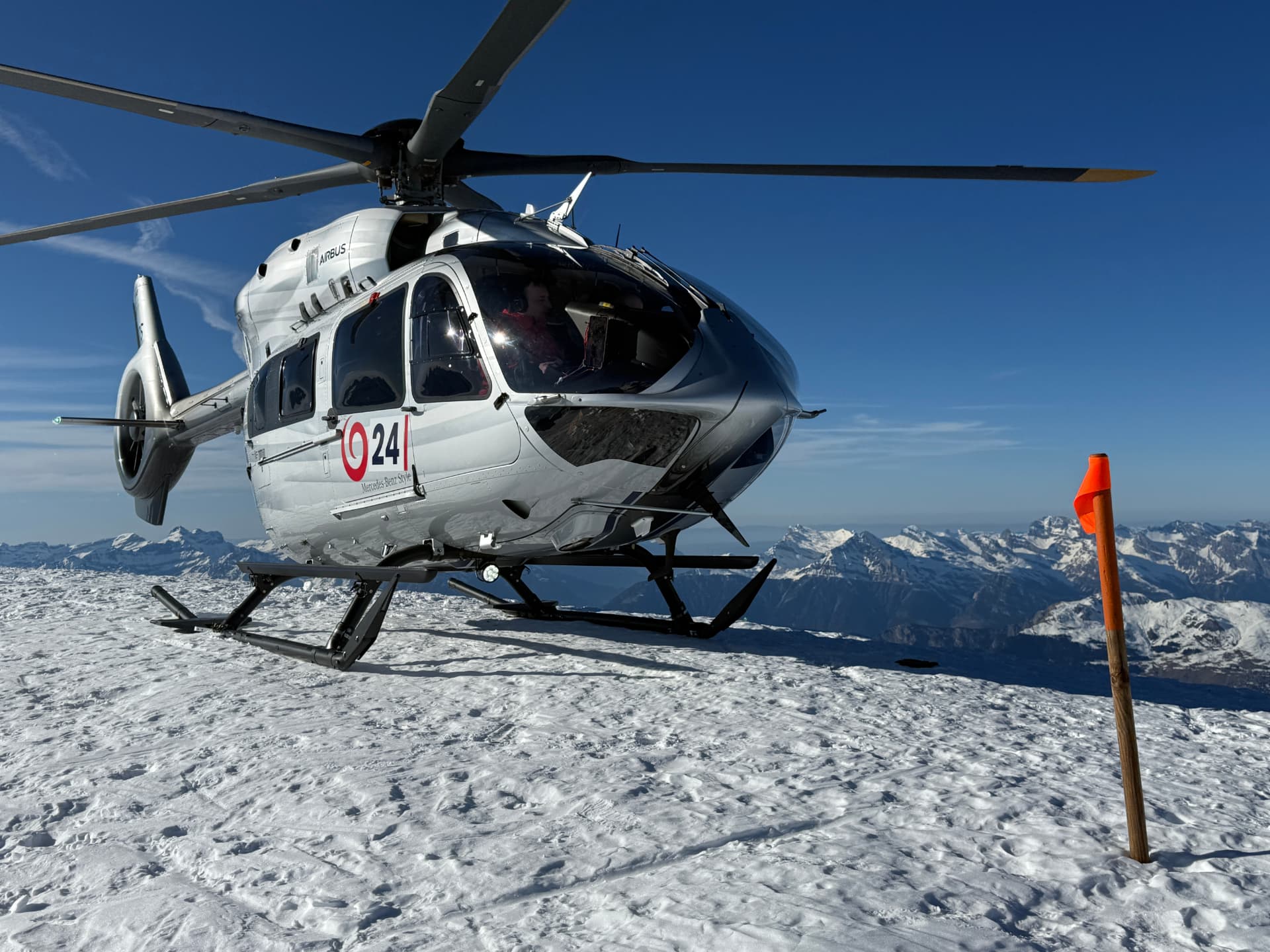
I fly in commercial air transport operations, train pilots and conduct pilot tests and checks as a senior examiner authorised by the Civil Aviation Authority.
I also serve as Head of Training at our company, LION Helicopters, and as Director of Helicopter Flight Operations at ABS Jets a.s.
So my original career as a database developer turned out rather differently from what I had planned. My IT knowledge still comes in handy, though—it's just that, rather than dealing solely with database systems, I now also deal with helicopters, their operation, maintenance, training and everything that goes with them.
And what do I enjoy most about it all?
Being able to combine flying, technology, working with people and the constant search for better solutions. Above all, helping others fulfil the same dream that once set me on this path.
Because the path to professional flying isn't always a straight one. What matters is that you keep enjoying the journey.
And, ideally, that you break fewer helicopters along the way than I did in my early model-flying days.