
Maintenance plan for the Guimbal Cabri G2
The Cabri G2 is one of the most modern helicopters in its class — it was designed to have a minimum of life-limited parts. Operators therefore spend less on costly component replacements and more time in the air.
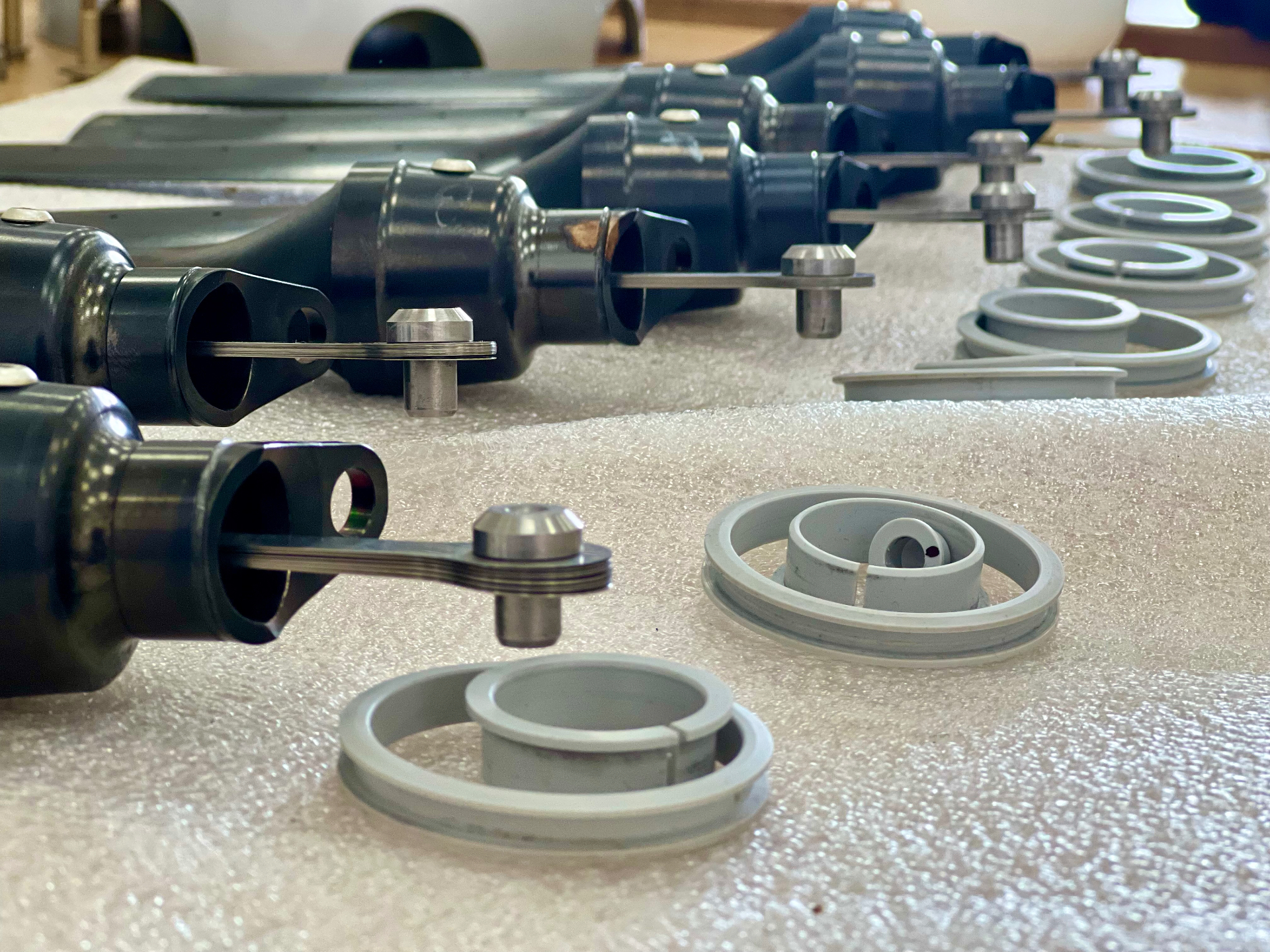
Life-limited assemblies
Minimum of life-limited parts
On the Cabri G2, the rotor blades, main and tail rotor hubs and the airframe itself have no fixed service life. The only components with a real limit are the gearboxes and the engine.
Airframe
The composite airframe of the Cabri G2 has no defined overall service life — the only limits are periodic inspections and condition.
Main and tail rotor blades and hubs
Rotor blades and both main rotor and fenestron hubs have no fixed life limit (on-condition inspection) — they are assessed during scheduled inspections.
Main and tail gearbox (MGB / TGB)
No calendar limit — service life is defined only by flight hours.
Lycoming O-360 engine
TBO (Time Between Overhaul) depends on the spare parts used and operating intensity. It is followed by a full overhaul.
Glossary
How to read the maintenance table
Maintenance plans use several abbreviations and units. Below is a short explanation of the terms and why it matters to distinguish flight hours from calendar time.
TBO
Time Between OverhaulInterval between overhauls. For the Lycoming engine of the Cabri G2 this is typically 2,500 flight hours or 12 years, depending on the version and spare parts used. Once TBO is reached the engine is overhauled or replaced.
MGB / TGB
Main Gear Box / Tail Gear BoxMGB = main gearbox (between the engine and main rotor). TGB = tail gearbox (drives the fenestron). Both have a service life of 2,200 flight hours on the Cabri G2, with no calendar limit.
Flight hours (h)
Flight hoursThe time the helicopter is actually airborne. Most tasks are driven by flight hours — e.g. the 50-hour inspection or the 2,200-hour overhaul. Hours are counted from lift-off, not from engine start.
Calendar time
Months / yearsThe task must be carried out even if the helicopter is flown very little. For example the 100-hour / 12-month inspection is due at whichever comes first: 100 flight hours or 12 months since the previous inspection.
Scheduled inspections
Maintenance schedule and duration
The overview below shows how long the helicopter stays on the ground for each type of scheduled maintenance. Thanks to refined processes and an extensive spare-parts stock we keep downtime to a minimum.
| Inspection / task | Duration |
|---|---|
First 25 hours First inspection after running-in | < 1 day |
50 hours Basic scheduled inspection | < 1 day |
100 hours / 12 months Annual inspection | 1–2 days |
500 hours / 60 months Extended inspection | 3–5 days |
Lycoming SB388 — every 300 h Inspection of exhaust valves and guides | 4 hours |
Overhaul (engine, MGB, TGB) Overhaul of life-limited assemblies | 1–3 weeks |
The durations shown are indicative and based on standard practice at our service centre. Actual time may vary depending on the condition of the specific aircraft, additional tasks required and compliance with any Airworthiness Directives or Service Bulletins.
Need to schedule maintenance?
Write to us or call — we will arrange a slot that fits your operation.